Planning a Gutter Installation for Your Atlanta Home
Understanding the Basics of a Gutter System
A well-designed gutter system does more than just channel rainwater off your roof. It protects your foundation, prevents soil erosion around your home, and keeps basement walls dry. For homeowners in Atlanta, where heavy rainstorms are common and clay soils expand when wet, a proper setup matters even more. The first step in any project is to think through the overall approach rather than rushing to buy materials. A clear gutter installation plan helps you avoid common mistakes that lead to overflow, sagging, or premature rust.
Gutters work by collecting water from the roof edge and directing it to downspouts, which carry it away from the house. The pitch or slope of the gutter channel must be precise: too little slope and water pools; too much and the system looks awkward and may overshoot downspout placement. Most residential gutters slope about one-quarter inch for every ten feet of run. That small angle is enough to keep water moving without making the gutter look crooked. Checking slope during installation is one of those details that separates a dependable system from a frustrating one.
Choosing the Right Material and Profile
Aluminum, steel, copper, and vinyl are common gutter materials, but each has trade-offs. Seamless gutters, often formed on-site from a continuous roll of aluminum or steel, eliminate joints where leaks start. For Atlanta homes with trees that drop leaves and pine needles, seamless sections paired with leaf guards reduce cleaning work. Gauge thickness matters too: heavier gauge metal resists dents from ladders and ice better than thinner stock. Vinyl gutters are the least expensive and easy to install, but they can become brittle in sun and may warp under heavy rain loads. Copper offers a long life and a distinctive look, but the cost is higher and the metal reacts with certain roofing materials. Your choice should match the climate, the roof size, and how much maintenance you want to do.
Gutter profiles also affect performance. K-style gutters, with their flat back and decorative front, are common on newer homes and can hold more water than half-round shapes of the same width. Half-round gutters shed debris more easily and suit historic or cottage-style houses. The right profile depends partly on roof pitch and rainfall intensity. In Atlanta, summer storms can dump an inch of water in an hour, so capacity matters. A professional installer usually calculates the required width based on roof area and local rainfall data, but a general rule is that a five-inch K-style gutter works for most residential roofs, while a six-inch may be needed for larger roofs or steep slopes.
Downspout Placement and Water Routing
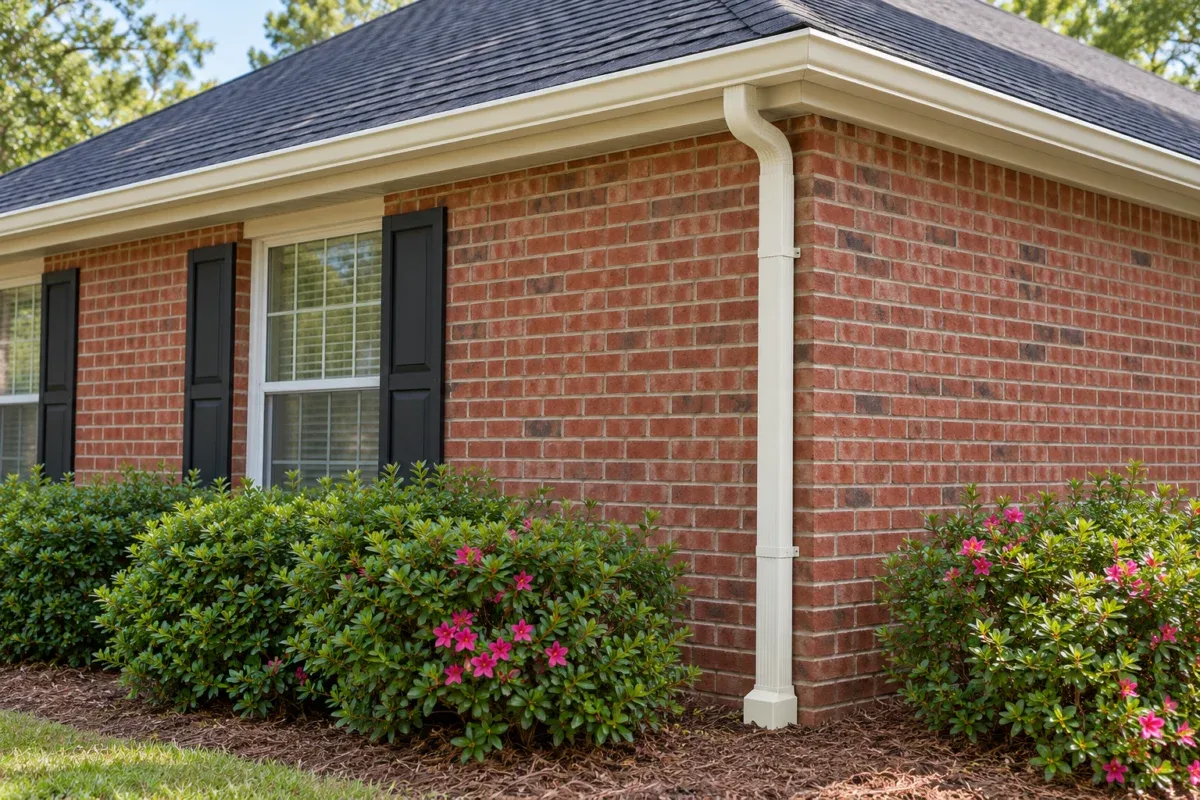
Downspouts are the exit points for collected water. Their placement determines how effectively water moves away from the foundation. Ideally, downspouts should be located at corners and at intervals of no more than thirty to forty feet along a straight run. Too few downspouts overload the system; too many create extra penetrations in the gutter. Each downspout connects to a length of pipe that carries water to a splash block, a buried drain, or a rain barrel. Splash blocks diffuse the flow and prevent a single jet from washing out soil. For homes with basements or crawl spaces, routing water at least four to six feet from the foundation is critical. Buried drain pipes, connected to downspout extensions, offer the best protection but require careful grading so they don't collect silt or freeze.
Water routing also includes the transition from gutter to downspout. A gutter outlet or drop outlet should be sized to match the downspout diameter. Three-inch by four-inch downspouts are standard for residential use, but two-inch by three-inch can work for smaller roofs. If you plan to connect a rain barrel, you need a diverter or a spigot at the downspout. That setup must still allow overflow away from the house during heavy rain. Thinking through these details before installation saves retrofitting later.
Gutter Slope and Seamless Installation
Getting the slope right starts at the high point near the center of a roof edge and runs downward toward the downspout. The fascia board or the roof edge itself serves as the reference line. A level and a string line help mark the correct pitch. For a typical Atlanta ranch house with a sixty-foot gutter run, the high end might be two inches higher than the low end. That difference is enough to keep water flowing without making the gutter appear uneven. Seamless gutters, formed from a single piece of metal, eliminate the leaks that occur at joined sections. They also reduce the chance of debris catching on seams and causing clogs. The trade-off is that seamless gutters require precise measurement and on-site bending equipment, so they are usually installed by professionals rather than do-it-yourselfers.
During installation, hangers or brackets must be spaced to support the weight of water and debris. Spacing of twenty-four to thirty inches is common, but heavier materials or deeper profiles may need closer spacing. Hidden hangers, which attach behind the front lip, give a cleaner look than visible brackets. For leaf guards to work well, they need to be installed at the same time as the gutter, not added later as an afterthought. That way the guard sits flush with the roof edge and doesn't create a gap where leaves can enter.

Replacement vs Repair: What to Consider
When an existing gutter leaks, sags, or rusts through, the decision to repair or replace depends on the extent of damage and the age of the system. A single leak at a joint or a small hole can often be patched with gutter sealant or a patch kit. But if multiple sections show rust, if the gutter has pulled away from the fascia, or if the pitch is wrong, replacement usually makes more sense. Replacing a few sections on an old system can lead to mismatched materials and ongoing leaks at new seams. A full replacement with a gutter installation plan that covers material selection, downspout placement, and water routing offers a longer-term solution.
Another factor is the condition of the roof edge and fascia board. If the wood behind the gutter is rotted, any new gutter will soon pull loose. In that case, replacing the fascia or adding a drip edge flashing is part of a sound gutter installation plan. Checking the roof edge for rot or termite damage beforehand prevents surprises. In Atlanta, where humidity can speed wood decay, this inspection is worth doing even if the gutters themselves look okay.
Leaf Guards and Maintenance
Leaf guards, also called gutter guards or covers, sit over the top of the gutter to keep out leaves, pine needles, and other debris. They come in mesh, foam, brush, and solid cover styles. Mesh guards with small holes let water through but catch most solid material. Solid covers with a narrow slit rely on surface tension to draw water in while deflecting leaves. Both types reduce cleaning frequency but do not eliminate it entirely. A guard that is poorly installed can trap moisture against the roof edge and promote rot, so installation instructions must be followed. For Atlanta homes with overhanging trees, leaf guards are a practical addition that can save hours of ladder work each year.
Even with guards, gutters need periodic inspection. Checking downspouts for blockages, looking for sagging sections after heavy rain, and clearing debris from the roof edge all help the system last. A simple splash block at ground level directs water away and prevents a muddy spot from forming against the foundation. These small maintenance steps extend the life of the gutter and protect the house.

Putting It All Together
A gutter installation that works well for years starts with thoughtful planning. You need to choose a material that suits your budget and climate, set the correct slope, place downspouts strategically, and decide on water routing that carries runoff away from the house. Seamless gutters reduce leak points, leaf guards lower maintenance, and proper gauge thickness ensures the system can handle a heavy load. For Atlanta homeowners, where rain can be intense and clay soils shift when wet, these details are not optional. A well-executed gutter installation plan protects the largest investment most people own: their home. Taking the time to plan before you buy or install pays off in fewer repairs, less maintenance, and peace of mind during every storm.